Ben Rhodes is the former Deputy National Security Advisor for Strategic Communications and Speechwriting under President Barack Obama.
New York Times Opinion –
“Rob Sand is young and reform-oriented, and he might be the next governor of Iowa. The Opinion contributor Ben Rhodes argues that the Democratic gubernatorial candidate for the state is running a playbook that could be the answer the party needs.”
As our media has twisted this election into”issues” that never existed a few months back. Certainly gas prices are important, but the horrible management of the economy is a much more important issue. The mismanagement of the economy by Republicans go back to the 1920s and more. Remember that Republican Great Depression of the 1930s? How about the Great Panic of 1893? Republican policies in action!
More children shot in our schools as Republicans fight for every person to be able to buy a weapon of war. Will this insanity ever end? Not as long as a Republican gets “donations” (read bribes) from the gun industry.
How about health care for every citizen that would also keep all of us safer from potential epidemics? Republican policies have actually revived once thought to be scourge diseases such as polio, measles and mumps. Their policies actually brought these diseases back into being – Good Gawd.
Their old-age policies will soon see seniors moving back in with their children if they are lucky enough to have children. Otherwise start looking for older folks living – and dying on our streets.
And so it goes with a long list of issues that Republicans ignore or make worse in order to funnel our money to the wealthy.
Just remember when you cast your ballot in the next week that Republicans will not do anything to help the average American. They will only heighten racism, income inequality and our debt in service to their moneyed overlords.
Use your vote to solve real problems not to feather Elon Musk’s nest.
Well damn near. But first a trip down memory lane with Stella’s fall leaf pile jumping! 3 minutes:
My last post until Halloween, so i think I will use it to relieve some tension and ask some serious questions.
A) Many analysts are regarding Trump’s actions concerning Russia and Ukraine as possible what?
B) Besides oil and diesel fuel, what other somewhat critical gas supply is being affected by the Iran War?
C) A woman in Ames, Iowa made national headlines when she sued to be able to do what?
D) A disgusting campaign ad by what Ohio politician garnered massive protests this week?
E) Why did the woman in labor suddenly shout “Shoudn’t, Wouldn’t, Couldn’t, Won’t, Can’t”?
F) Katie Zacharias – who was she again?
G) What US non-military person apparently on his own interfered to help Russia in their assault on Ukraine?
H) The US isn’t the only country having elections shortly. Can you name the other two major countries having elections this week?
I) Trump negated sanctions against Russia from a bill named for what Republican senator with an Executive order?
J) Why did the chicken go to the seance?
K) Among creditors lining up to get paid by Republican Lt. Gov. candidate Derek Wulf included what close relatives?
L) Global warming is getting brutal. According to European scientists, how many Europeans died due to last summers heat?
M) Now that he has ruined their markets and jacked up the price of fuels, Trump has promised what to farmers?
N) At a rally in Ohio Trump saw something he admired and just keeps talking about it. What is it?
O) Does Humpty-Dumpty love autumn?
P) Alberta had a vote on leaving Canada last week. How did it turn out?
Q) Hegseth, what a jerk. He was in such a hurry to get what irreplaceable object moved to his office that it ended up broken?
R) Did you hear about the claustrophobic astronaut?
S) Trump promises help to service members sickened by the water at Camp Lejuene, but only if what happens?
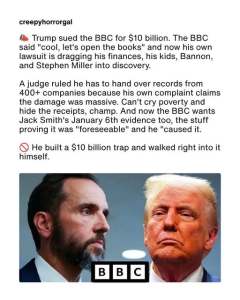
T) Whoopsie! Trump has been ordered to give a deposition by Dec. 11 in a $10B lawsuit he brought against what news company for defamation?
“More private schools, less healthcare, lower wages—we’ve already been headed in this direction as a state. I think it’s time to try something different.” That’s Charlie Wishman, president of the Iowa Federation of Labor AFL-CIO, the umbrella organization for many of Iowa’s unions.
tip of the hat to all-hat-no-cattle.com
Answers:
A) treason
B) helium which is critical to some electronics working
Even as people were absorbing the incredible brazenness with which Trump backed our supposed enemy while doing what he could – or approving someone doing what they could – to hamstring our supposed ally in Ukraine, the Republican Party was rolling out yet another October Surprise! This time the surprise was an ad in the Ohio governor’s race that was below bottom scraping in its content.
I saw that the CBC had a story on this issue, so I purposely chose that one to post thinking the Canadians might be less partisan on this. No matter where the story comes from, it is very hard to avoid the stink of this bomb. As a victim of sexual abuse as a child myself, it is hard to say how outraged i got when I first heard this story. 2 minutes:
Creating and running this commercial shows just how low today’s Republican Party is willing to go. And to show there is no bottom to their depravity, no moral compass and absolutely no boundaries they have the number 2 person in our government give it an approving boost.
Even by current Republican standards, this is low. This ad was met with outrage from Democrats and Independents across the country. Yet the MAGA and Republicans of this country have said little. I guess they are going to see if it will work. Maybe this commercial will become the template for what will be a no-holds-barred presidential election in 2028 – if it happens.
So there you go – two October surprises that I am sure no political prognosticator would have predicted even under the spell of Jack Daniels or a doobie. Both have long range effects for this Republican Party that is now showing itself that it has little to do with its former incarnation. Nor does it have much to do with what the average American deals with in their lives.
On the one hand Republicans through the Ramaswami commercial show there are no depths to which they will no go to win. Also it highlights what they think of how little they think life is worth. Add this commercial to the damage they do by cutting off food to children, cutting off health care, cutting back on education. The list goes on. Many of those cuts were just enacted in their Big Beautiful(really ugly) Bill. They do not give a hoot in hell about any of us unless thay can use us.
The other October Surprise is Trump’s knife in the back to our allies while he switches our allegiances to what were our enemies. Will any country or group of countries ever trust us again? I would suspct in international relations potwntial allies and customers will have a caution such as “remember 2026!” or “Can we trust a country that elected Trump?”
I stumbled across another view of Trump’s treasn from the always very sober and reserved Paul Krugman:
Trump and his allies hate America and what it stands for
As Sanger notes, Trump’s support for Putin is unique in American history. Previous administrations have made deals with erstwhile adversaries, as Nixon did with China, and given up on support for failing allies, as the U.S. did in Vietnam and Afghanistan. But never before have we outright switched sides, let alone supported an aggressor while vilifying that aggressor’s victim.
What makes Trump’s support for Putin even more remarkable is that Russia has, by many accounts, been actively aiding Iran against America in the war Trump started. Who says so? Well, among others, Dan Caine, chairman of the Joint Chiefs of Staff. And the aid goes beyond intelligence sharing that has helped Iran target U.S. forces. Russia has also reportedly been sending Iran explosives and weapons components.
What would Republicans be saying if a Democratic president were supporting a foreign dictator even as that dictator was helping another nation kill American troops? They would be crying “treason.” But this is all apparently “fine” with Trump.
What’s going on here? It’s important to understand that — as Phillips O’Briendocuments — Trump hasn’t “pivoted” away from Ukraine toward Russia. He has been a Putin supporter all along.
The part where Putin is getting info that is being passed to Iran to kill American soldiers is particularly galling. It is really sickening that elected Republicans across the country have seen this develop for more than 10 years yet have been so scared of Trump that they whimper in Trump’s shadow.
Thinking about voting for Hinson? Where was she when she was really needed? Where was she when her voice was needed? Supporting Trump with votes that attacked common Americans while enriching the super rich. Trump’s support of Russia in the Ukraine fight is hardly anything that just popped up. There have been glaring warnings from the very beginning of his public career.
Where has any of the Iowa delegation been as Trump has publicly acted as a toady for Putin? Nunn? Supporting Trump. Miller-Meeks? Supporting Trump. No doubt Joe Mitchell and Chris MacGowan didn’t become Republican candidates by bucking Trump. Like the others they fall in line.
The Republican Party has been a cult of personality for at least a decade. During that time any who didn’t fall in line with Trump were squashed. Just ask Liz Cheney or Adam Kinzinger. A more recent example is Thomas Massey who dared to defy Trump on the Epstein issue.
Trump is empowering Putin, abandoning Ukraine, and preparing to bargain with dictators over the future of the world. The Republicans who could stop him are doing nothing…
Trump gutted his own Russia sanctions law, cut a diesel deal with Putin, and is now talking about carving up the world with Putin and Xi. Congress has the power to stop him right now: why are Thune and Johnson still on vacation?
Yesterday Donald Trump told reporters he’s ready to sit down with Vladimir Putin and Xi Jinping in Shenzhen next month — apparently, a modern-day Yalta conference to carve up the world — and that Ukraine’s president may not be invited to the meeting that will decide Ukraine’s fate.
That came just three days after he spit on the grave of Lindsey Graham by signing an executive order waiving every operative section of the Lindsey Graham Sanctioning Russia and Iran Act that both houses of Congress had passed on an overwhelmingly bipartisan basis.
Gone are the 500 percent tariffs on Russian goods, the secondary sanctions on Putin’s oil customers, and the requirement that the sanctions stay in place until Russia made peace on terms Ukraine accepted. All destroyed on a Friday night while Congress was out of town. And now he’s publicly, shamelessly defending it and essentially daring Republicans in Congress to do anything about it.
All this was happening while the investigation into who was responsible for Elon Musk’s Starlink system being strategically cut to Ukraine resulting in Ukraine being unable to stop an attack. Trump either gave the order himself or allowed Musk to cut the support for Ukraine. Either way, Trump would be ultimately responsible for selling out an ally to an enemy in wartime. Sounds like treason to me. Why has the republican congress done nothing??
“Live by the sword, die by the sword. Those who pick fights with me should understand that I will find out who is really pulling the strings and come for them, not just their puppets …”
Who gave this blowhard decision making power over military decisions? Trump!
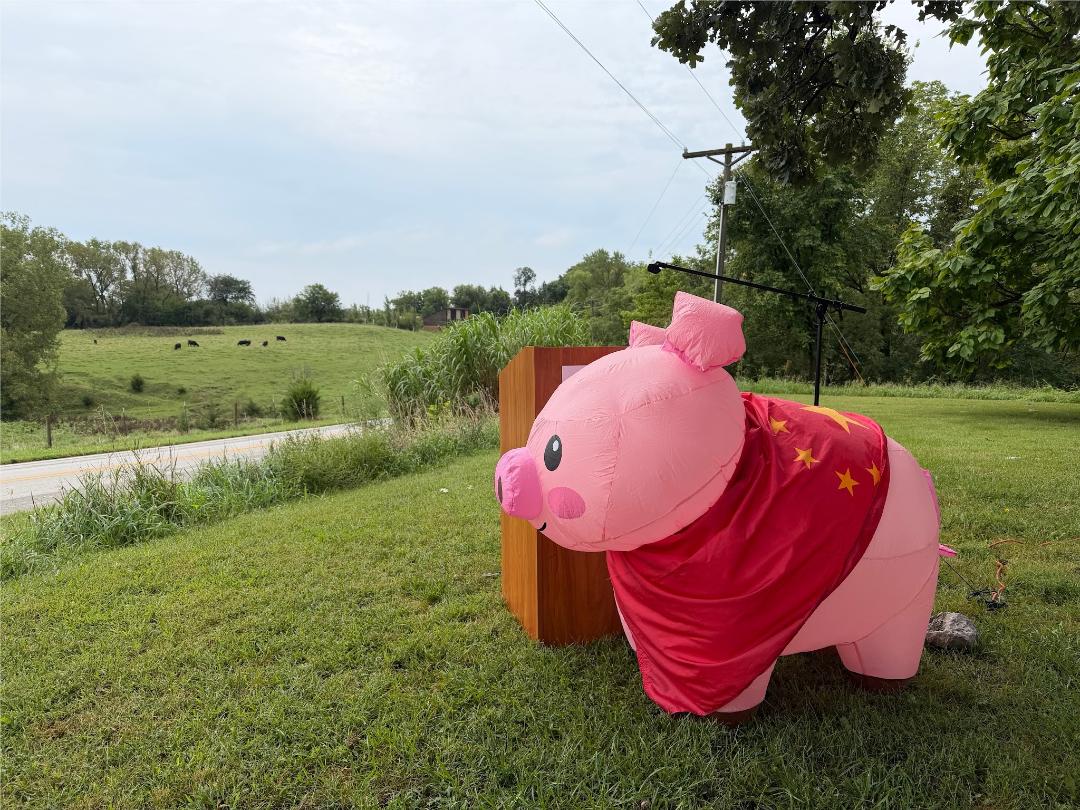
Farm Action Fund Brings China Pig to Trump Rally to Expose Ashley Hinson’s Save Our Bacon Act
WHAT: A visibility event outside of President Donald Trump’s rally with Iowa family farm advocates on the harm Ashley Hinson’s Save Our Bacon Act would do to independent family farmers who have found viable markets not controlled by corporate packers like China-owned Smithfield.
WHEN:Thursday, October 22, 2026, at 2:30PM CDT
WHERE: Grass area before entrance of Sioux Gateway Airport, 2403 Aviation Blvd, Sioux City.
WHO: Farm Action Fund Iowa Political Director Adam Shriver + others
BACKGROUND: With Congress expected to return to the Farm Bill debate in November, Iowa is at the center of the fight over whether the federal government should preempt state food and agriculture laws. Representative Ashley Hinson, the lead sponsor of the Save Our Bacon Act, has claimed the bill is needed to “fix” California’s Proposition 12, but many Iowa farmers have already adapted to California’s guidelines giving them a premium market. A July Mason-Dixon poll found that Iowans oppose the Save Our Bacon Act by a nearly 2-to-1 margin.
Iowa has lost roughly 90 percent of its independent hog farmers over the past 45 years to consolidation and four corporate packers who control 70% of the market, including China-owed Smithfield. As noted by several influential conservatives, including Laura Loomer and Tomi Lahren, the bill’s chief beneficiary is Smithfield Foods, the world’s largest pork producer, owned by China-based WH Group. A statement by a CCP controlled media outlet had previously stated that the Save Our Bacon Act, “would significantly increase China’s share of the U.S. pork market if it is successfully passed.”The conservative Iowa Standard just published an OpEd on why conservatives should oppose Hinson and the Save Our Bacon Act while Republicans Rick Scott and Anna Paulina Luna have also expressed opposition. Newsmax’s Ed Henry scooped that many GOP Republicans believe the Save Our Bacon Act is bad policy but have to stay silent out of deference to Hinson.
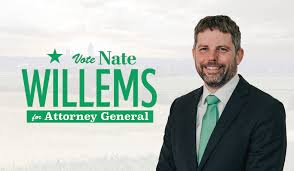
If you haven’t followed Nate Willems on the campaign trail yet, please take a few minutes to find out about the great work he has been doing for twenty years to stand up for Iowa workers and what his plans and focus will be if elected.
“The job of the attorney general is to be the people’s lawyer. And that’s not happening right now. Brenna Bird is more interested in looking out for corporate polluters and political insiders. I want to refocus the AG office onto helping regular Iowans…
I’ve made public plans to create the first ever wage enforcement unit in the Iowa AG’s office. There are 900 million dollars a year stolen out of Iowa workers’ paychecks. State government does not quite nothing but almost nothing about it. That’s important to me.
I want to revitalize the consumer protection division in the AG’s office that goes to work for consumers and senior citizens… I want the office focused on Iowa. Not on political lawsuits or national politics..” – Nate Willems
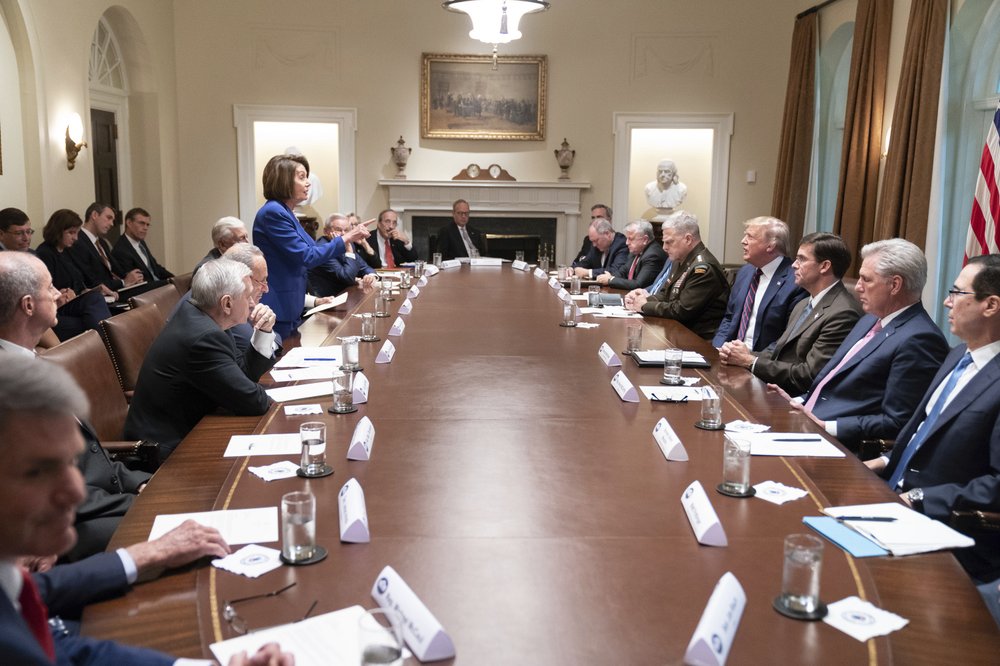
Nancy Pelosi: “With you all roads lead to Putin.” Photo: WaPo
Most of us remember Nancy Pelosi standing up and pointing across the table at Donald Trump during his first term declaring, “With you, all roads lead to Putin.” And during the final televised presidential debate in 2016, Hillary Clinton accused Trump of being a “puppet” for Russian President Vladimir Putin. [1, 2].
I remember both “Putin’s Puppet” media moments well.
In 2016 during the televised debate Trump wanted to make Clinton look bad by saying Putin had no respect for her. That’s when Hillary coolly retorted, “That’s because he would rather have a puppet as President of the United States.” Trump’s clever come-back was this: “I don’t know Putin. He said nice things about me.”
Clinton went on to say on the televised debate stage in 2016:
“He [Putin] would rather have a puppet as President of the United States…The Russian government has engaged in espionage against Americans. They have hacked American websites, American accounts of private people of institutions, then they have given that information to WikiLeaks for the purpose of putting it on the internet. This has come from the highest levels of the Russian government, clearly from Putin himself as 17 of our intelligence agencies have confirmed, to influence our election. So I actually think the most important question of this evening is, will Donald trump admit and condemn that the Russians are doing this and make it clear that he will not have the help of Putin in this election, that he rejects Russian espionage against Americans, which he actually encouraged in the past. Those are the questions we need answered. We’ve never had any thing like this happen in any election before.”
Watch:
Two smart, strong, courageous, accomplished democratic women demonized by Fox News and the right wing propaganda machine. Turns out they were not only right all along but more importantly, willing to say it out loud – on TV and in official settings.
It seems like more and more now, people are getting it. But what took the country so long to understand the implications of Trump’s relationship with Vladimir Putin? Why have the media neglected and abandoned this story? Are we ready to deal with it as a country now? The mid-terms will tell.
Here’s the latest from The Lincoln Project. Maybe it will have more credence when it’s a man saying it.
And finally this, my favorite televised stand-up-to-Trump moment. Pelosi ripping Trump’s SOTU speech to shreds in 2020 and then telling reporters afterwards, “It was a manifesto of mistruths.”
Governor Kim Keynolds: (515) 281-5211 U.S. Capitol Switchboard: (202) 224-3121 Iowa Members of Congress - Rep. Randy Feenstra (R) - Rep. Ashley Hinson (R) - Rep. Mariannette Miller-Meeks (R) - Rep. Zach Nunn (R) Iowa US Senators - Senator Joni Ernst (R) - Senator Charles Grassley (R)

 Ben Rhodes is the former Deputy National Security Advisor for Strategic Communications and Speechwriting under President Barack Obama.

 Early voting has started in Iowa. Find your polling location and early voting information at your