
Iowa and China's Currency Valuation
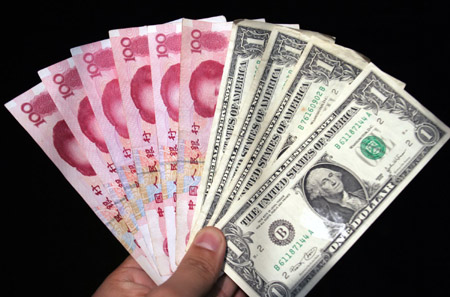 by Paul Deaton
“In
the post-Reagan society, where the middle class is under continuous
assault, we value the ability to buy cheap roofing nails, cans of beans,
shoes or hand held communications devices and don't see the connection
between their import from China and the decimation of the economy of the
middle class.“
During a conversation with a contractor, we discussed the impact of China on the roofing business. It came down to the roofing nails. He had identified two U.S. sources for roofing nails, but the cost was fifty percent higher than those manufactured in China. In China, labor is cheap, enabling use of old technologies and inefficient working conditions, said the contractor. He had viewed video footage of this. It seems unlikely that appreciation of the Chinese currency would fix this disparity, especially when people who can't afford to replace the roof have to.
Some argue that valuation of the Chinese Yuan is important, but most Iowans do not understand that it is even an issue in their lives. In the post-Reagan society, where the middle class is under continuous assault, we value the ability to buy cheap roofing nails, cans of beans, shoes or hand held communications devices and don't see the connection between their import from China and the decimation of the economy of the middle class. The loss of jobs due to sourcing of manufacturing in China is an effect we deal with without associating it with something as seemingly abstract as the value of the Yuan.
In a recent statement, Congressman Dave Loebsack (D-IA) said, “China has manipulated its currency for years in order to promote its own manufacturing and to enable it to flood the US market. I have heard time and again from industries and businesses in Iowa that this manipulation directly affects not only their ability to export American-made goods abroad but to sell American-made goods here at home. China’s protracted undervaluation of its currency has reduced US exports, hurt American businesses’ competitiveness abroad, caused the loss of American manufacturing jobs, promoted outsourcing of American jobs and American manufacturing, and significantly contributed to our large trade deficit with China.”
People who know more about this topic than the author agree. This includes U.S. Treasury Secretary Timothy Geithner, who said of China's undervaluation of the Yuan, “it's not tenable for China long-term, and it's not fair to all of China's trading partners, America and others, because it creates a playing field that's unbalanced.”
In all of this talk about Chinese currency, there is an assumption that trade relations can ultimately occur on a “level playing field.” That will never happen. While the United States can strive for balance with specific trading partners like China, multinational corporations have built their business models on regional disparities in labor, environmental compliance and resource costing. China is in the mix of most multinational corporation business models. As China, India and countries in Africa emulate American consumer behaviors, markets have opened for Iowa companies like HNI Corporation and Bandag of Muscatine. They built or acquired Chinese manufacturing facilities to support those markets. These Iowa companies benefit from Chinese currency valuation, at least in the short term.
When NAFTA passed, an exodus of U.S. Manufacturing to Mexico commenced. When Mexican manufacturing became uncompetitive, multinationals moved operations to China. If China were to become uncompetitive, manufacturing could move elsewhere. Constantly seeking to drive out costs, businesses large and small “buy cheap and sell dear.” Members of the middle class so often are on the “sell dear” part of the equation. Chinese currency valuation is a factor in this, but middle class consumers will seek out the best value in the goods they purchase, and the impact of the Yuan's value is a minor consideration if its impact may not be.
Kudos to Congressman Loebsack for taking on this issue, but relief cannot come fast enough for everyday people in Iowa who depend on the low prices created partly by China's manipulation of its currency. In the post Reagan society, the purchase price of consumer goods remains a key consideration and we can't afford to pay more if China were to appreciate its currency. Perhaps this is short sighted, but it is the plain truth as economic hard times become our norm.
~Paul
Deaton is a native Iowan living in rural Johnson County and weekend
editor of Blog for Iowa. E-mail
Paul Deaton
**Now
through Election Day – Early Voting across Iowa**
Consult
your county auditor for details or
Go to
IowaDemocrats.org
to find out where and how to vote
early in your county.
 Blog For Iowa