“State Auditor Rob Sand, the Democratic candidate for governor, delivered these remarks to the annual meeting of the Iowa State Education Association in West Des Moines on April 11, 2026. The ISEA (the largest labor union in Iowa) announced at the meeting that they are endorsing Sand in the governor’s race.”
Iowa May Day Strong Events: Click on the image to find events in Iowa
From our inbox: Here is an important word from May Day Strong about the next national day of action. There are already ten events scheduled in Iowa. Click here to find out if your town has one scheduled or to host one.
Can you turn up the energy with us by committing to host an action in your community? Hosting can look different depending on what makes sense for you and your network:
Organize a rally, march, or gathering
Lead a teach-in or community conversation
Coordinate a workplace or school-based action
Organize a neighborhood food or clothing drive
Fundraise for a local legal aid fund or mutual aid fund
Bring people together in any way that builds visibility and collective power
This May Day is an important escalation in our collective fight against billionaires and corporations and for all our futures. We need as many actions as possible to deliver a powerful message to the billionaire class. Sign up to host an action here → [event link]
Calls to have on your radar as you prepare for May 1:
💥📅 For our action hosts, event hosts, & partners leading actions on May 1st: a May Day host call on April 16th focused on messaging, materials, and public rollout.
💪🔥For labor organizations & unions: We are convening all unions members and labor leaders to get into formation in time for May Day 2026 on Tuesday, April 21st at 8pm ET / 5pm ET.
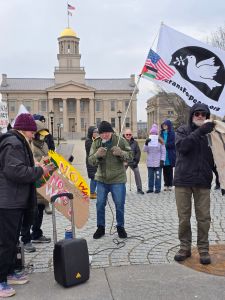
Ed Flaherty of Veterans For Peace addressing about 75 people gathered to protest the military action in Venezuela over the weekend.
This letter to the editor by our friend Ed Flaherty, a veteran and tireless peace activist, was originally published in Little Village April 13, 2026.
By Ed Flaherty, Iowa City
The Iran war is not going well for the U.S. And please call it war, not a conflict, not a military operation. This war began on Feb. 28, with no congressional approval and with no notification to the U.S. public. I believe Iowa’s senator Charles Grassley is uniquely situated to stop this U.S. war on Iran.
Senator Grassley is the oldest and longest-serving member of the U.S. Senate. He has the well-earned respect of his fellow Republican senators. His voice could be instrumental right now in putting an end to this ill-conceived, illegal, ill-fated war. He must vote FOR a proposed resolution that prohibits further U.S. military action in Iran. He must vote AGAINST any proposal authorizing additional spending for the war. He must REMIND the president and his fellow senators that any military action on Iran after April 25, unless specifically authorized by Congress, would be a violation of the 1973 War Powers Resolution.
Grassley, on Jan. 12, 1991, was the only Republican senator to vote against the first Gulf War. In 2018 he reflected on that vote. He said,
Make no mistake. It’s not easy to vote against the vast majority of your party and your president. Based on my feedback from Iowans and after many hours of deliberation, my gut told me to vote “no” against military action. I felt the people were not fully behind it. And I didn’t want to risk dividing the country like Vietnam.
Ironically, a Gallup poll a week before that vote indicated 57 percent of respondents agreed it was time to go to war, and 37 percent wanted more time for sanctions to work. In contrast, polling from early March to April 6 this year on the Iran war has consistently shown that 54 percent of Americans disapprove of the war, with 39 percent in favor. Other polls show similar results.
So, if Senator Grassley had the courage to vote against a war in 1991 that had a majority of public support, how much more should he feel it his duty to voice opposition to a war that the people do not want? Wars are easy to start. Witness the surprise and unauthorized beginning of the current Iran war. Wars are difficult to end, and the longer they go on, that much harder to end. Senator Grassley has the unique opportunity and obligation to use his voice and his vote to stop this war now.
Thank you to everyone who continues to call and email your legislators about water monitoring. Keep it up! If you’ve already sent an email or Action Alert, but you haven’t heard back from your legislator, you can call them again and ask for a response. Or you can use our phone-calling script and call your legislator directly. Find the Action Alert and script by clicking here or the button above.
What We’re Hearing:
If your legislator has questions, please have them contact IEC so we can provide accurate, up-to-date information:
A bill in the House of Representatives (HSB 772) proposed to fund the real-time water quality monitoring system at $300,000 annually. However, that’s not enough to fund a statewide network. It is critical that the state fund the full amount: $600,000 in annual appropriations to run the system and a one-time allocation of $500,000 to replace aging equipment.
There has also been confusion about the bill because it specifies the funds are for “groundwater monitoring” instead of surface water monitoring. The appropriation language must specify funding for the Iowa Water Quality Information System operated by IIHR-Hydroscience and Engineering at the University of Iowa.
Some legislators and other decision-makers have said the Iowa DNR’s monthly water sampling is adequate — that the real-time water monitoring network is unnecessary. Let your legislator know that there is no other publicly available monitoring network in the state that provides water quality data at the same frequency and level of detail as the Iowa Water Quality Information System. Think about it like a smoke detector in your home: Would you rather have a smoke alarm that tests one time per month, or one that continuously monitors your home in real time?
In fact, some of the state’s own studies show that real-time sensors do a better job at calculating short-term and long-term nitrate loads than monthly sampling. According to a report by the Iowa DNR, Iowa Department of Agriculture and Land Stewardship (IDALS), Iowa State University, and IIHR, the real-time monitoring system “provides researchers, agencies, and landowners with a valuable tool they can use to directly monitor the impact of land‐use strategies/changes on downstream water‐quality, enables watershed stakeholders to understand the fate and transport of nutrients in Iowa’s waterways, and helps in measuring the impact of the INRS [Iowa Nutrient Reduction Strategy] on water quality.”
Catch Up Quickly:
In 2023 the legislature removed funding from the water quality monitoring network, and as a result, the public stands to lose access to data from 60 real-time water quality sensors after June 2026. Without adequate funding, most sensors will be removed from Iowa’s rivers and streams, with coverage reduced to only a handful of counties, leaving much of the state without data to make informed decisions.
Learn more about the sensor network by downloading our fact sheet or watching a short presentation from IEC Water Program Director Colleen Fowle and the Iowa Farmers Union.
A joke is circulating on the internet that SMR stands for Spending Money Recklessly. It isn’t funny because it is true, even if big money investors have a plan to recoup their investment in Small Modular Reactors with interest. Regular folks like me don’t want new nuclear power when renewable projects that include solar and wind power generation can meet much of our needs.
Here’s the rub with my way of thinking: renewables are clean, cheap, and safe for the first 70-80 percent of meeting our electricity needs. Something needs to fill the gap so the grid can reliably deliver exactly the amount of electricity customers use. What fills that gap? Nuclear energy is a candidate for that, yet it is beset with problems, especially in the United States, like some I mentioned last week.
In her new book, Clearing the Air: A Hopeful Guide to Solving Climate Change in 50 Questions and Answers, author Hannah Ritchie has four on nuclear power:
Q: Isn’t nuclear power dangerous? A: Nuclear power is not risk-free, but it’s one of the safest energy sources we have.
Q: Doesn’t it take too long to build a nuclear plant? A: Nuclear plant in the West often have long delays., but some countries can build plants in six to eight years.
Q: Isn’t nuclear power too expensive? A: Nuclear power is expensive, especially in the U.S. and Europe, but some countries are building it much cheaper.
Q: What about radioactive waste? A: We know how to handle radioactive waste safely in deep geological sites, but countries need to prove it.
Ritchie points out there is almost no case for fossil fuels to fill the mentioned 20-30 percent gap in our electricity needs going forward because they are unsafe compared to other forms of electricity generation. When we recognize all their external costs, they are too expensive.
SMR stands for Small Modular Reactor. These nuclear reactors are designed to be factory-built and transported to the installation site as modules, allowing for streamlined construction, scalability, and potential integration into multi-unit configurations, according to Wikipedia.
According to Ritchie, one of the problems of U.S. construction of nuclear power plants is there are not enough experienced workers. We need to build a good number (maybe 10-12) of identical nuclear power plants to train workers in these jobs. Changing government regulations regarding nuclear power have created an environment where each plant is different and that variation is part of the reason construction is delayed. Controlling the design characteristics of Small Modular Reactors by building them in a factory could possibly address the worker issue by standardizing non-site specific differences between nuclear power plants.
As I write this, Eastern Iowa does not have a confirmed commercial SMR project, nor does anyone in the country. There is talk about installing one or more at the Duane Arnold Energy Center in Palo. By “talk” I mean there is policy activity in the Linn County Board of Supervisors, and discussion of existing infrastructure to handle nuclear materials at Palo. Last month, in both the Iowa Senate and House, legislation (HSB 767/SSB 3181) moved to provide sales and use tax exemptions for nuclear energy projects. If enacted into law, it would encourage development of nuclear power projects in Iowa. So far, Iowa is at jump street regarding new nuclear power.
The idea of implementing new SMRs in an environment where there are zero of them in commercial operation in the U.S., seems a bit unlikely. It would be if I were the investor. The role of the federal government is critical in advancing this form of electricity generation.
There is also the legacy to deal with. While nuclear power is safer, by orders of magnitude, than fossil fuel electricity generation, when a problem happens as it did in Fukushima, Chernobyl, or Three Mile Island, it receives global attention. There are other, real-world issues.
Any discussion of nuclear power in the U.S. carries the weight of our earlier nuclear history. Civilian nuclear reactors are distinct from weapons programs, but they share regulations, institutions, supply chains, and a legacy of radiation policy shaped during the Cold War. Uranium mining for both weapons and fuel exposed workers and nearby communities. Atmospheric testing at the Nevada Test Site spread fallout across the country, including in Iowa, and as far away as Rochester, New York, where radioactivity ruined film being produced by Kodak. These experiences led to compensation programs and continue to influence public trust, particularly when new projects or waste sites are proposed. The relevance is not technological equivalence between power generation and weaponry, but the role that historical exposure plays in how communities assess risk today.
One might ask, isn’t the president eliminating regulations to enable the nuclear power industry? Yes and no. While the administration shifted policy direction toward evaluating nuclear reactor proposals more quickly, reducing the regulatory burden, and treating nuclear power as a strategic national priority, it does not mean there are no regulations at all. In fact, the changing regulatory environment is one reason why it takes much longer to build a new nuclear power plant here than in other countries. Every regulation change demands design changes for accommodation. One expects post-Trump administrations to make more regulatory changes.
Small Modular Reactors are no silver bullet, although no form of electricity generation is without issues. Whether SMRs move from planning to commercial use is an open question in 2026.
Editor’s Note: Due to a glitch in the platform, this post was up last week, but not seen. I am running it again because the message remains important.
Joe Trippi’s 2004 work to mine the internet and empower supporters of the Howard Dean campaign was revolutionary. As he described it, it was an “open-source revolution” that went beyond the dissemination of campaign messages. Using Meetup.com, blogs, and other media, he turned hundreds of thousands of volunteers into decentralized, self-organizing activists who powered fundraising and local organizing — like a “virtual mid-size city.” It was something to see in real time.
Since then, there have been two distinct iterations in the use of information technology in campaigns. The first was the Republican Party’s use of Cambridge Analytica to microtarget individual voters during the 2016 Trump campaign. While the success of this operation continues to be debated — and how it worked was not transparent — it was a compelling idea for moving beyond bulk messaging that delivers identical messages regardless of individual differences. What made it a game changer was that voter persuasion could be individualized at scale. On the darker side, Cambridge Analytica announced it was shutting down and filing for insolvency in May 2018. The closure was a direct result of intense media scrutiny, investigations, and the loss of clients following the March 2018 revelations that it misused data from up to 87 million Facebook users.
That progressives need to catch up with Republicans in the use of technology seems evident. This challenge is complicated by the advent of readily available, yet still unproven, artificial intelligence technologies like Claude, ChatGPT, and Google Gemini.
Today, it isn’t clear how artificial intelligence will be used in campaigns. We do know a few things. U.S. Senator Bernie Sanders recently sat for an interview with Anthropic’s Claude. (Click here for a clip from that conversation, which exposes some of the motivations for collecting data from internet users.) We also know we need to balance ethical safeguards on AI with innovation in tools that could benefit progressive causes. Finally, misinformation and AI-generated propaganda could undermine democratic processes. What do we do?
What we can’t do is stick our collective progressive heads in the sand. I can’t count how many people I’ve heard say something like, “AI uses too much energy, so I won’t use it.” Two things about this. First, privacy issues are more important than energy use. Second, energy use compared to what?
In her new book, Clearing the Air: A Hopeful Guide to Solving Climate Change in 50 Questions and Answers, author Hannah Ritchie writes, “Data centers currently use only a few percent of the world’s electricity. The big question, though, is whether this will explode with the rise of AI. Probably not.” She discusses a Pareto-style analysis that points to the true energy hogs. Not surprisingly, these are industry, buildings, electric vehicles, air conditioning, and heating, with data centers eighth on the list at around 1-3 percent of consumption. At a minimum, progressives need to stop hyping unknown energy scenarios and instead resolve issues around privacy (Senator Sanders has a bill) while pressuring Google, OpenAI, and Anthropic to meet their corporate climate goals.
Dealing in facts, not hyperbole, is always good advice.
AI is imperfect and no substitute for grassroots knowledge about campaigns and the real voters who will participate in elections. While the database of personal profiles AI draws upon is vast, the granular knowledge that a political activist in a specific race possesses is more relevant to an individual’s potential behavior than AI ever will be.
Like other technologies, AI is a tool that belongs in campaign toolboxes. It is an extension of what Joe Trippi did so long ago — and it is worth learning about instead of shunning.
Part of the forestry preserve at Lake Macbride State Park.
I was taken aback by the administration’s decision to dismantle the U.S. Forest Service. Jim Pattiz outlined what happened in his substack post, “Trump Administration Orders Dismantling of the U.S. Forest Service.” What they are doing is bad. While the news broke suddenly, and agreements were signed quickly, the future of roughly 193 million acres of forests and grasslands not carved up with roads or clear cut logging has been up in the air for decades. With this administration, loggers and anti-government agents appear to be getting their way.
In 1970, Joan Didion opened her celebrated book The White Album by saying, “We tell ourselves stories in order to live.” The U.S. Forest Service action reminded me of this and the competing stories it represents.
One story, summarizing Scott Russell Sanders in A Conservationist Manifesto, goes like this. The national forest represent a wilderness with something to teach us. We are part of a living biome. We should protect these wild places as a habitat for wildlife, as a reservoir of natural processes, and as a refuge for the human spirit. The U.S. Forest Service adds a layer by being a research arm of the federal government.
Another story , according to Sanders, asserts that to “lock up” these acres from development would cost jobs, handicap economic growth, and “threaten the American way of life by denying us access to fuel and timber.” We Americans should be free to go into the warehouse that is nature and do whatever we want, regardless of consequences. It is squandering resources to not harvest timber from national forests and refrain from building roads there.
My story is we lie to ourselves by saying we can lawsuit our way out of this. Already, the Center for Biological Diversity and the Sierra Club filed lawsuits challenging the USDA’s “interim final rule” that removed public comment and environmental review procedures for forest projects, arguing the fast-track rules violate the Administrative Procedure Act and the National Environmental Policy Act. I wish them well. But shouldn’t we be able to agree that the 8.5% of land these acres represent should be set aside and preserved? It is very American to settle this in courts rather than in the hearts and minds of citizens.
In typical fashion for this administration, they are moving very quickly to dismantle the U.S. Forest Service, using the playbook developed to change the Bureau of Land Management during Trump 1.0. The headquarters will move from Washington, D.C. to Utah, and much of the research into how to prevent forest fires, and related issues will apparently end. Many employees will resign because they can’t support what the administration is doing or leave because moving to Utah is not a pleasant prospect. This is the change Republicans seek.
On my daily walks through the woods on a gravel trail, I consider the quiet and beauty of place. The sounds of bird life fill the air, and the air breathes fresh and clean, that is, unless a wind blows in from a concentrated animal feeding operation. We all need this type of solace from time to time.
We do what we can to survive in a Republic. Lawsuits are part of that as are competing stories about our experiences with the same things. I seek to be part of the biome and contribute to its well being: At the same time, I seek to understand all these stories and more, to contribute more than I take, while taking only what I need to survive and protect the commons for future inhabitants of Earth. That is a just path.
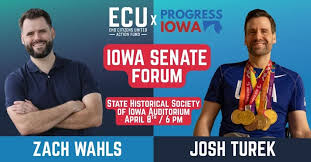
Streamed live on April 8th. Event moderated by Mazie Stillwell, Executive Director with Progress Iowa and Tiffany Muller, President of End Citizens United.
Forum moderated by Mazie Stillwell, Executive Director with Progress Iowa and Tiffany Muller, President of End Citizens United.
“Republicans have committed $29,000,000.00 in their support of Ashley Hinson in this race. They think they can come in here and buy this race. And we’re not going to let them, are we?” – Mazie Stillwell, moderator
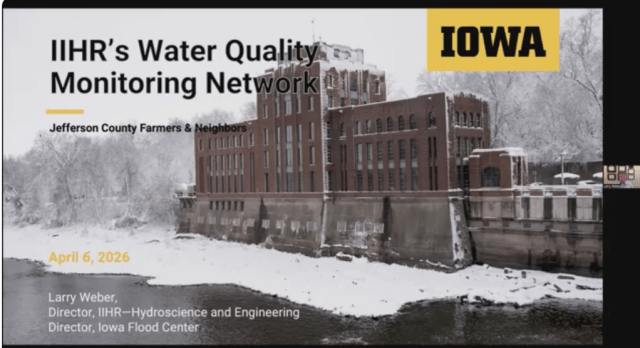
Iowa’s real-time nitrate water sensor network is in danger of losing funding on June 30, 2026. But Iowa state legislators have the power to restore its funding this session. Larry Weber, Director of the IIHR-Hydroscience and Engineering and the creator of the water quality sensor network, provides a solid look at how the Iowa Water Quality Information System network operates and why it’s so important to the health and safety of Iowans.
Weber’s presentation includes:
• Why the network is especially important for small municipalities in rural counties.
• How farmers, state agencies and more rely on data from the system
• How it’s different from DNR, USGS, USDA and IDALS sensors
• What unique and critical information they provide that keep Iowans safe.
• Plus a vibrant Q&A section
0:00 Introduction – Diane Rosenberg, JFAN Executive Director 4:54 Nitrate Sensors Presentation – Dr. Larry Weber 4:54 Background Information on IIHR and the Iowa Flood Center (as it relates to IQWIS) 16:28 Continuous Real-time Nitrate Sensors 37:30 Q&A Session 1:01:28 Action Steps
5. Attend a legislative forum scheduled in your area and ask about the water sensors.
6. If you in or near Fairfield, join us on Friday afternoon from 4-6 pm for a postcard party at Scream Ice Cream, 1401 Main Street, Fairfield, entrance on south side of building
7. Watch for a petition coming from JFAN on the water sensor network.
Additional Information about the Distinction Between the IIHR and DNR/IDALS Sensors
Adam Shriver, Director of Wellness and Nutrition at The Harkin Institute, addresses some misinformation floating about and points out the differences between the IIHR and the DNR/IDALS water sensors in his recent Substack column, These Two Things Are Not the Same.
Thank you for all you can do to advocate for funding for the IIHR water sensors. It only costs 32¢ per Iowan each year to properly fund the sensor network. Our public health and well being is worth 32¢!
Governor Kim Keynolds: (515) 281-5211 U.S. Capitol Switchboard: (202) 224-3121 Iowa Members of Congress - Rep. Randy Feenstra (R) - Rep. Ashley Hinson (R) - Rep. Mariannette Miller-Meeks (R) - Rep. Zach Nunn (R) Iowa US Senators - Senator Joni Ernst (R) - Senator Charles Grassley (R)

 Watch Democratic gubernatorial candidate Rob Sand address the ISEA. Check out his campaign website to volunteer or donate.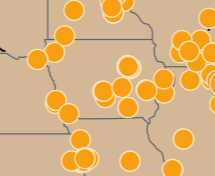

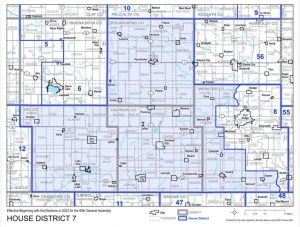 Rachel Burns is running for Iowa House District 7. Check out her website at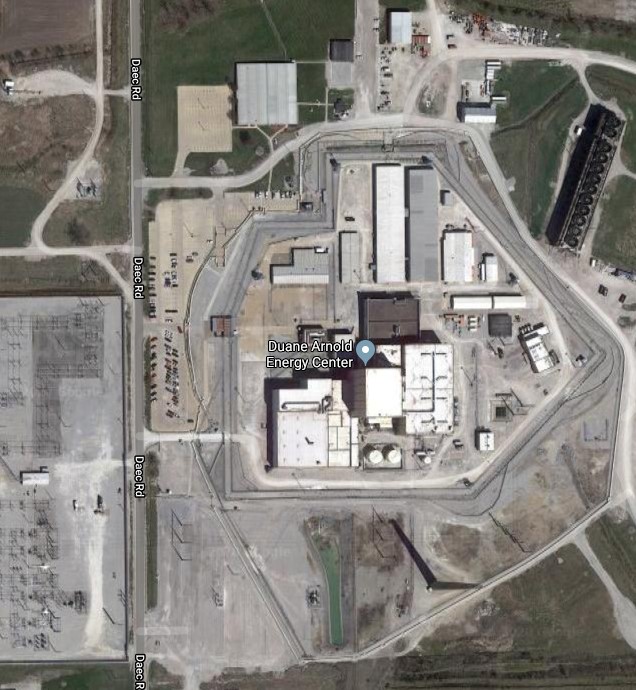
 Blog For Iowa